The Challenge
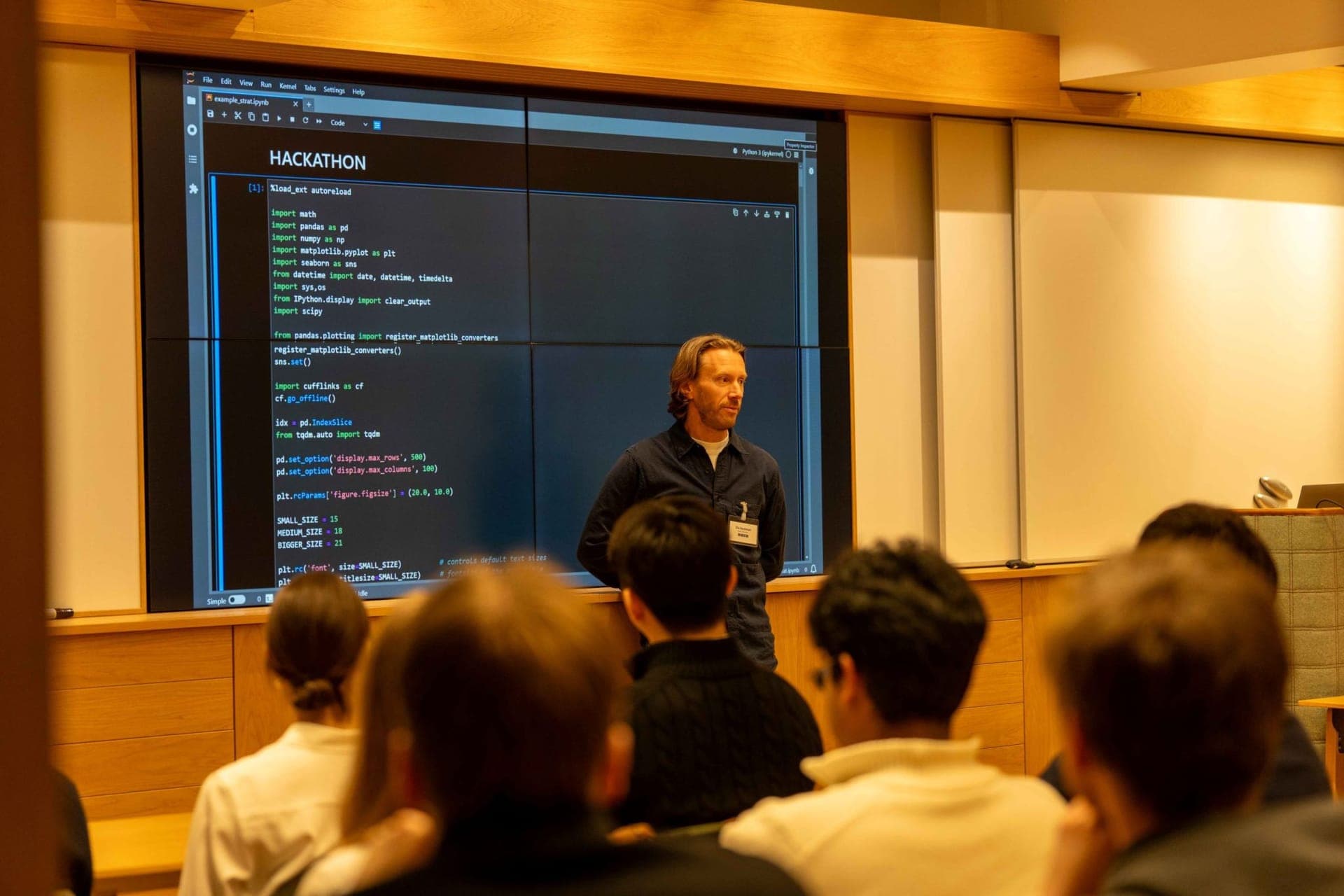
On Saturday, March 29th, 2025, Lynx organized its third annual Hackathon at their Stockholm headquarters. The goal was: building a fully systematic trading strategy that could navigate real market futures data and deliver strong risk adjusted returns. 38 students from 12 diverse backgrounds, spanning high school to medicine, gathered to compete.
Teams were given time series data based on real market futures and had to set position and volatility targets. The winning strategy would be determined by risk adjusted performance, with special emphasis on robustness during tail risk events, those rare but devastating market crashes that can wipe out years of gains.
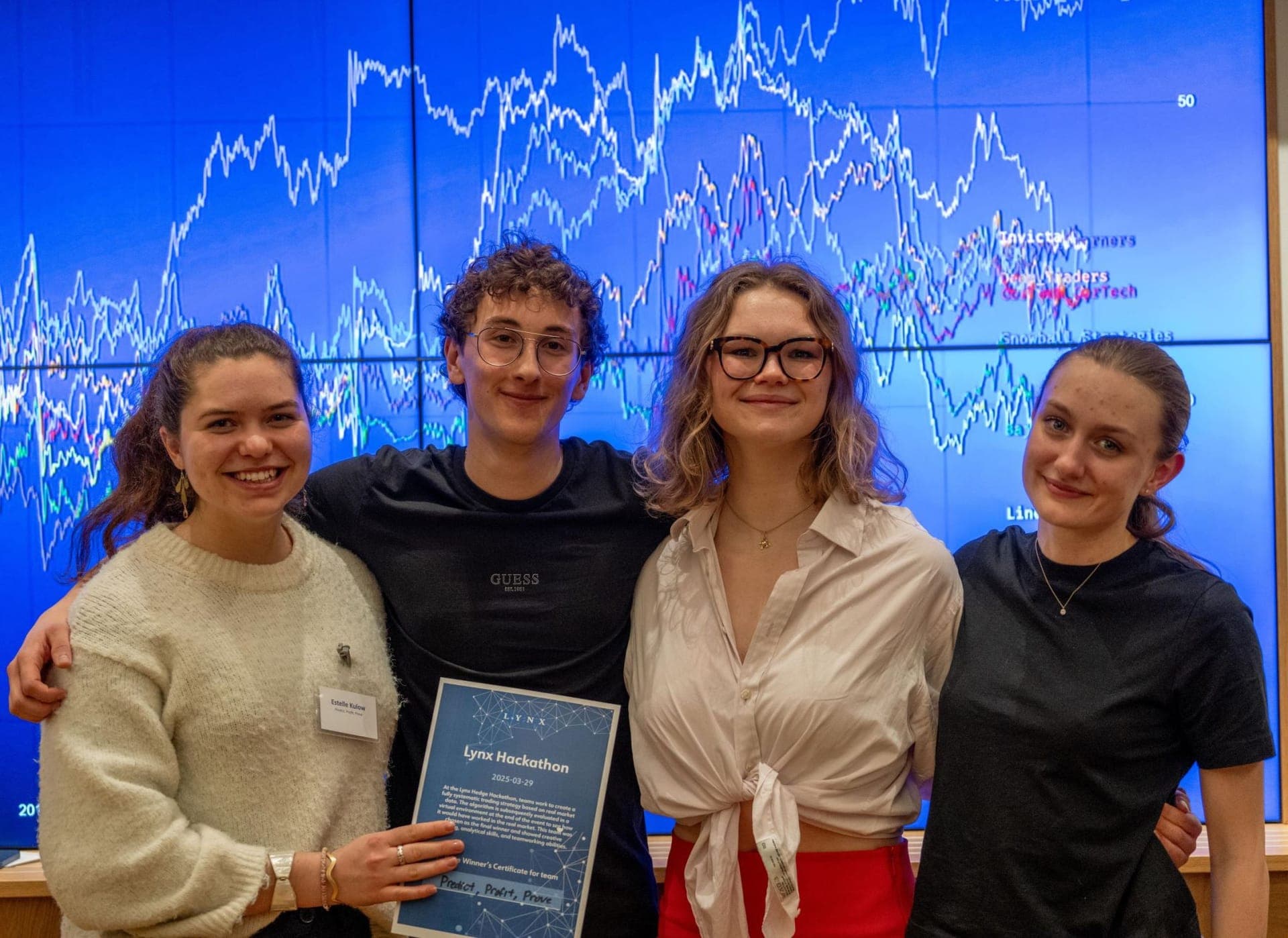
We formed our team "PREDICT, PROFIT, PROVE" with Estelle Kulow, Carlotta Hölzle, Nelly Körling, and myself. We were complete beginners: none of us knew how a hackathon worked, we didn't know the first thing about systematic trading, and we definitely didn't understand how opening, high, low, close prices and macro data could turn into profitable positions. Still, we applied and got accepted, top 10 out of many applicants.

Building the Strategy
Our approach was methodical. We focused on understanding time series data of market futures, macro indicators, and the challenge of predicting not just direction, but also volatility and position sizing. The key insight was that winning wasn't just about returns, it was about risk adjusted performance and surviving tail events.
We built a strategy that could identify trends in the market data using technical indicators, manage risk through careful position sizing and volatility targeting, adapt to market conditions by adjusting our approach based on macro signals, and withstand tail events by building in safeguards against extreme market movements.
The technical work involved feature engineering from the raw price data, building predictive models, and most importantly, implementing robust risk management. We knew that a strategy that looks great in backtesting but crashes during a market crisis wouldn't win.

The Result
As the day concluded, all algorithm were evaluated in a simulated trading environment. The atmosphere was electric as we waited for the final rankings.
1ST PRIZE: "PREDICT, PROFIT, PROVE"
The experience taught us that systematic trading isn't just about fancy algorithms or complex models. It's about understanding risk, building robust systems, and having the discipline to stick to a strategy even when markets get volatile. Most importantly, it proved that you don't need to be a finance expert to tackle complex challenges. Sometimes a fresh perspective and systematic thinking is exactly what you need.